If you're setting up a craft brewery, the control panel is often one of the last decisions that causes real headache. Some suppliers push instrument-type panels, others default to a PLC touch screen, and the price difference is significant. So which one should you choose?
Here's the short answer: For the brewhouse, it depends on vessel count — a 2-vessel system is fine with an instrument-type panel. For fermentation, instrument-type is also the priority. At this scale, your money is better spent on tanks, heat exchange area, and temperature accuracy than on a PLC touch screen.
1. Brewhouse Control Panel: Instrument-Type for 2 Vessels, Consider Touch Screen Only at 3+ Vessels
At the startup stage, most craft breweries use a 2-vessel configuration (mash/lauter tun + boil/whirlpool). At this scale, an instrument-type brewhouse control panel is completely sufficient: intuitive to operate, a fault in one loop doesn't affect the others, and replacing a meter is cheap.
There's a fairly clear industry dividing line: 2-vessel systems typically come with manual or switch-type panels, while 3 or more vessels generally justify a touch-screen automatic panel . Supplier product pages confirm this pattern: for 2-vessel brewhouse systems, the control panel is often listed with the instrument cabinet as an explicit option rather than the default.
One thing to watch: many suppliers now push "touch screen + HMI" as the standard configuration even on craft 2-vessel systems. So when actually purchasing, the instrument-type panel may not be the default — you need to actively confirm it's available. If the supplier defaults to a PLC touch screen, ask whether the extra cost is really worth it at your scale.
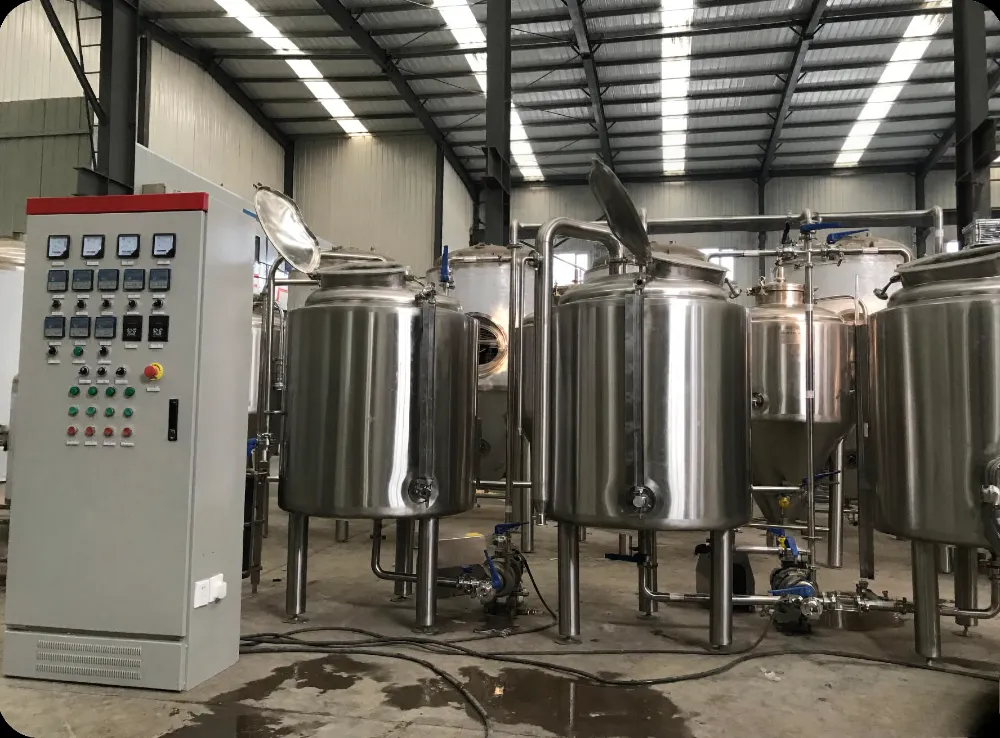
2. Fermentation Control Panel: Instrument-Type First — More Stable and More Economical at Low Tank Counts
This judgment runs against a lot of marketing material, but it's more practical for small craft breweries. Equipment manufacturers give two explicit reasons for not recommending PLC touch screens for fermentation control:
First, fermentation temperature control logic is inherently simple — open the valve when over temperature, close it when the target is reached. A PLC brings no fundamental convenience here; it just makes operation more complex. A touch screen can't display brewhouse and fermentation on the same page, so checking fermentation tank temperatures on site means flipping back and forth between screens .
Second, from a reliability standpoint, instrument-type is safer. Each tank has independent PID control, so a fault in one doesn't affect the others; if the PLC program fails, the entire control system may stop .
Craft breweries usually have a small number of fermentation tanks. Instrument-type panels control each tank independently — simple, cheap, and if one fails you just replace it. The advantage of PLC fermentation control panels shows up mainly in 8-tank, 16-tank, and 24-tank modular expansion scenarios , which a startup brewery is unlikely to reach anytime soon.
The downside of instrument-type should also be stated clearly: no automatic logging and no remote alarms. If the customer has hard requirements for batch traceability or overnight over-temperature alerts, then it's not a question of whether instrument-type is "enough" — the requirement itself pushes the selection toward a controller with logging and communication capabilities. Without such requirements, instrument-type is the reasonable choice.
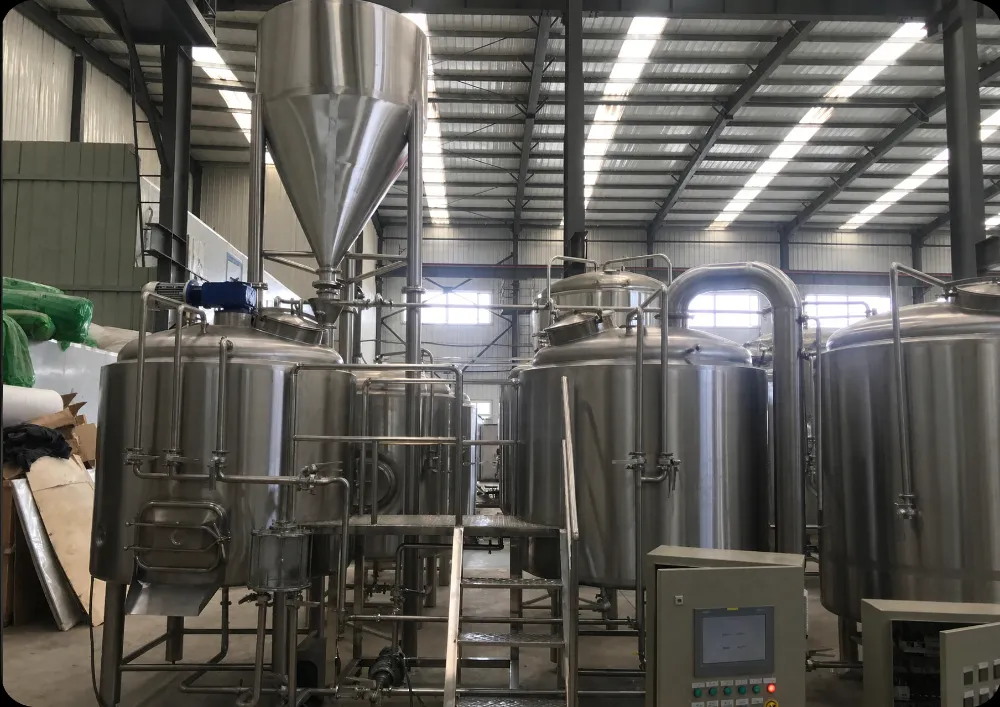
3. When Is a PLC Touch Screen Actually Worth It?
It's not that you absolutely can't use one — it's that the need has to be real:
- You chose 3+ vessels for the brewhouse, or the supplier defaults to a touch screen, so PLC is acceptable on the brewhouse side;
- You clearly need recipe storage, temperature trend viewing, and over-temperature alarm notifications — that's when a touch screen has real value;
- You clearly need PC or mobile remote temperature monitoring — instrument-type basically only works on site;
- You clearly plan to expand within a year or two — go straight to a modular PLC sized for the future, avoiding a cabinet rebuild later.
If none of the above applies, a PLC touch screen at the craft startup stage buys very limited convenience for the extra money.
4. Enclosure and Certification Are Add-Ons, Not the Core Selection Criteria
Stainless steel cabinets, UL-certified cabinets, CE-certified painted cabinets — these are commercial and compliance details. Decide instrument-type vs. PLC first, then choose the enclosure. If you need to export to the US or the customer explicitly requires UL or CE, then pay the premium for certification; without hard requirements, a standard cabinet is sufficient.
Of course, if your plan explicitly includes expansion, brewing multiple beer styles, and batch traceability, then the value of a PLC touch screen is real, and the extra money is worth it. The key is to think clearly: are these needs present now, or just "possibly later"?