In the craft beer industry, the most talked-about topics are usually mashing, fermentation, yeast, recipes, and even hop varieties. But what truly affects brewhouse yield, flavor consistency, and production efficiency is often an overlooked step—malt milling. For homebrewers and small craft breweries, a stable, adjustable grain mill grinder with matching capacity is often more practical than buying another can of hops.
Why Malt Milling Should Not Be Taken Lightly
Many brewers just starting out use a small hand-crank mill or borrow someone else's equipment. But once production increases, problems appear:
- Inconsistent grind size and large batch-to-batch variation
- Capacity cannot keep up, wasting time before mashing
- Roller overheating, affecting malt flavor
- Metal contamination, creating food safety risks
- Equipment that is not durable, leading to high maintenance costs
This is especially true for customers running small beer brewing systems. Their malt usage is no longer at the homebrew level. At this point, a real grain milling machine is not just a tool—it is part of the production process.
How to Look for a Suitable Grain Mill Grinder
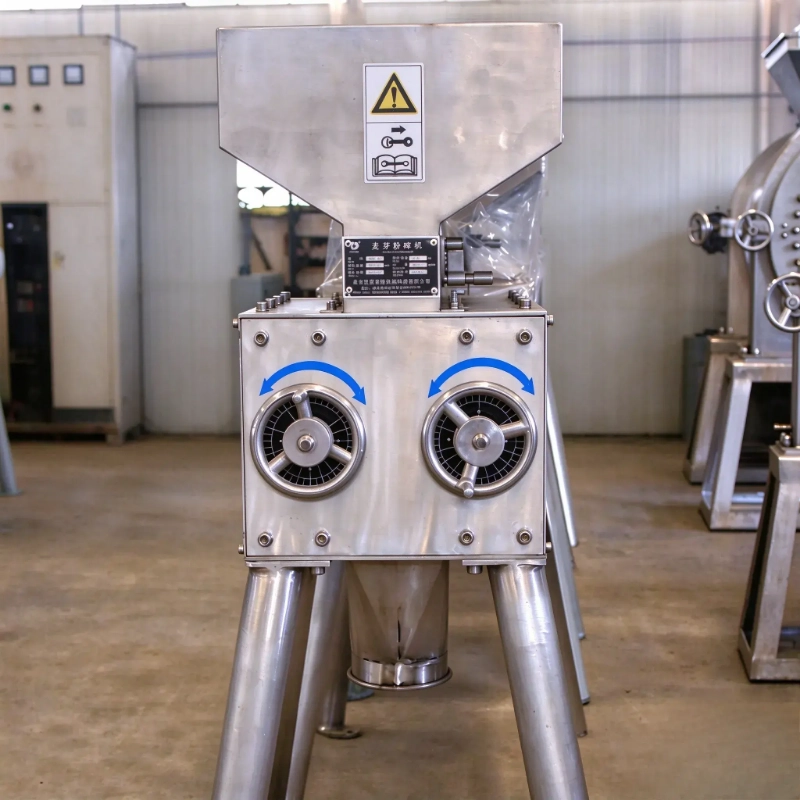
1. Dual-roller structure with differential speed
The dual-roller structure is currently the mainstream solution for malt milling. The two rollers run at different speeds, squeezing and tearing the malt at the same time. This cracks the malt husk while keeping it largely intact, which benefits both mashing and lautering.
2. Adjustable grind size
Different recipes, different malts, and different mashing processes require different grind sizes. A grain mill grinder with adjustable roller spacing allows brewers to adjust flexibly according to actual needs instead of using a one-size-fits-all approach.
3. Matching capacity
For homebrewers, a few dozen kilograms per hour may be enough. But for nano breweries and microbreweries, capacity must at least match the amount used per batch to keep up with the mashing schedule.
4. Temperature control and magnetic metal control
If roller temperature is too high, malt flavor can be affected. If magnetic metal content exceeds standards, it becomes a food safety issue. A qualified grain mill grinder must have clear specifications for both points.
5. Material and durability
A carbon steel frame is standard, with stainless steel as an option. For brewing environments with higher humidity and stricter cleaning requirements, the stainless steel version is more worry-free.
Why Brewing Systems Especially Need a Reliable Mill
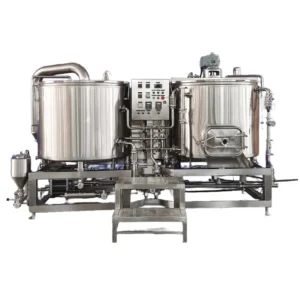
For example, a 3BBL beer brewing system is an interesting scale:
- Larger than homebrewing, so hand-cranking is no longer viable
- Smaller than large industrial plants, so over-investment is unnecessary
- High requirements for batch consistency
- Practical limits on equipment size, power, and cleaning maintenance
Brewers at this scale often need neither the cheapest nor the largest machine, but a grain mill grinder with matching capacity, adjustable crushing, stable operation, and simple maintenance.
If milling holds things back, mashing, lautering, and fermentation downstream will all be affected. Conversely, if milling is stable, the entire brewing process becomes much smoother.
Choosing Equipment Is Not Just About Specifications
When many customers choose a grain mill grinder, their first reaction is to look at the price. But after actually using it, what they care about more is:
- Whether grind size is stable
- Whether capacity keeps up
- Whether rollers are durable
- Whether cleaning is convenient
- Whether after-sales support is guaranteed
Especially for equipment exported to different markets, voltage, materials, safety standards, packaging, and transportation must also be considered. These are not issues that a specification sheet alone can fully solve.
If you are planning your own brewing system, or looking for a stable and reliable malt milling machine for your existing production line, it may be worth re-examining everything starting from the milling step.