Brewers treat wort Plato as a target: the recipe says 12°P, the reading comes out at 11.8°P, and the instinct is to "fix" it. But wort Plato is an outcome metric. It records how much dissolved material ended up in the water after every choice you made between the mill and the lauter tun — grind setting, mash temperature control, grist ratio, and runoff. Chasing the reading to adjust the reading treats a symptom, not the cause. The question worth asking is: with the same malt charge, why does extract yield vary batch to batch? The answer lives in the equipment, not in a longer boil.
What Actually Determines Wort Plato? (Not Boil Time)
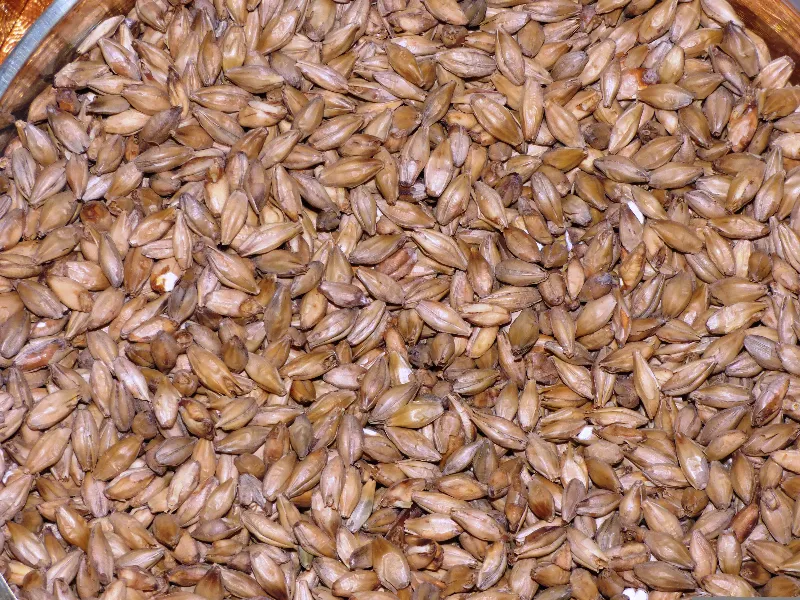
Wort Plato is determined primarily by malt modification and mill settings, not by extending the boil or thickening the grist ratio. A 2005 pilot-scale study in the Journal of the Institute of Brewing found that once gelatinization temperature is reached, variations in the mashing program have no significant effect on extract yield. What matters is the degree of modification of the malt itself — which is why the grain-handling step before the mash tun deserves more attention than most brewers give it.
Does a Finer Grind Raise Wort Plato? (Yes, But With a Limit)
A finer grind raises extract yield by exposing more endosperm surface to enzymes, but over-crushing destroys the husk filter bed during lautering. Malt conditioning is adopted by many craft breweries precisely because it balances "cracked, not crushed." Reported extract yield improvements are around 0.7% over dry milling. If your wort Plato is low, check the mill gap before considering a longer boil — an adjustable malt mill lets you dial roller spacing per batch instead of guessing.
Does a Longer Boil Increase Wort Plato? (It Raises Concentration, Not Extract)
Extending the boil raises the Plato reading by evaporating water, not by extracting more sugar from the malt. The boil's real functions are isomerizing hop α-acids, coagulating proteins, driving off DMS, and sterilization. DMS removal efficiency depends on boil vigor and surface area, not time alone. A vigorously rolling 60-minute boil may outperform a limp 90-minute one. Using an extended boil to chase wort Plato trades energy, color, and foam quality for a number — if the real goal is a steady rolling boil, that is a brewhouse kettle with external wort heater question, not a timer question.
Does a Thicker Grist Ratio Give Higher Wort Plato? (It's a Trade-off)
A thicker mash provides better thermal protection for enzymes and allows more sparge water, but it also slows lautering and increases bed resistance. If your lauter tun capacity is limited, or poorly modified malt has pushed viscosity up, forcing a thicker ratio can mean the mash tun Plato looks great while kettle volume falls short — and overall yield drops. The fix is usually not "add more malt" but a mash/lauter tun sized to your actual grist load, so bed depth stays in the range that filters cleanly.
What Should You Check When Wort Plato Comes In Low?
Check in this order, because each step affects wort Plato more directly than "boiling an extra half hour":
- Mill gap — has it been adjusted recently?
- Malt analysis sheet — what are the modification and β-glucan levels for this batch?
- Mash ramp rate — was it so fast that enzymes denatured before they could work? A temperature-controlled mash tun holds the ramp without overshoot.
- Sparge water temperature — was it too low to rinse residual sugar effectively?
Next time you take a wort Plato reading, treat it as an audit tool, not a target. If the number comes in low, work through the checklist above before touching the boil kettle. If you're planning a brewhouse or upgrading a single vessel, send us your batch size and target Plato and we'll size the equipment to match.