
Quick Answer: No, a carbonation stone is not necessary for every fermentation tank. Whether you need one depends on what the tank is used for — not on the general term "fermentation tank."
1. Primary Fermentation Tanks Do Not Need a Carbonation Stone
The main job of primary fermentation is for yeast to convert sugar into alcohol and CO₂. During this stage, yeast multiplies rapidly, and the tank is full of yeast, proteins, and hop residues. If you install a carbonation stone at this stage, it quickly becomes a contamination dead zone. Yeast and proteins clog the 0.45-micron pores, and the stone must be removed for proper cleaning. A clogged carbonation stone loses carbonation efficiency and can become a breeding ground for microbes, affecting the flavor of later batches.
For this reason, a fermentation tank used only for primary fermentation does not need a carbonation stone. You can carbonate later in a bright beer tank, or use natural carbonation (Spunding) by sealing the tank near the end of fermentation and letting the yeast's own CO₂ reach your target carbonation level.
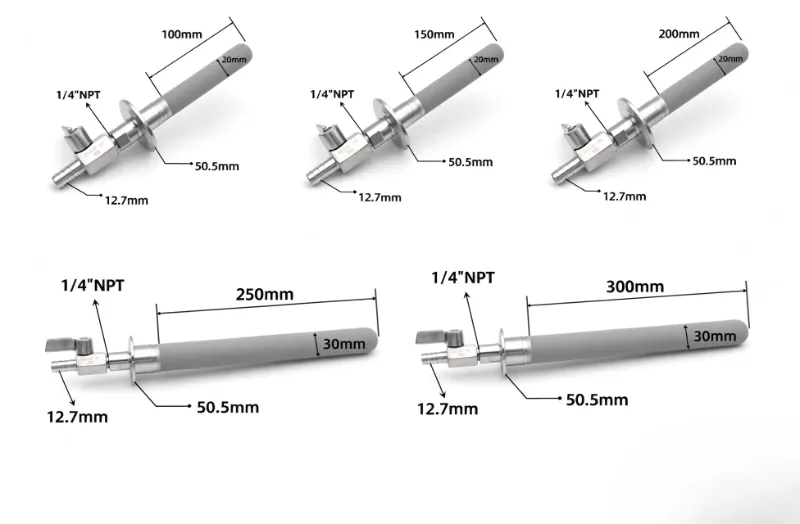
2. Unitanks Are Where a Carbonation Stone Makes Sense
When a brewery combines primary fermentation and maturation/carbonation in one unitank, the tank must handle active carbonation during maturation. This is where a carbonation stone is needed. The stone disperses CO₂ through fine pores, creating tiny bubbles that dissolve faster and help the beer reach the target carbonation level.
So the rule is simple: if the tank carbonates, it needs a carbonation stone. If it only ferments, it does not. Unitanks need one. Pure primary fermentation tanks do not. Bright beer tanks usually do.
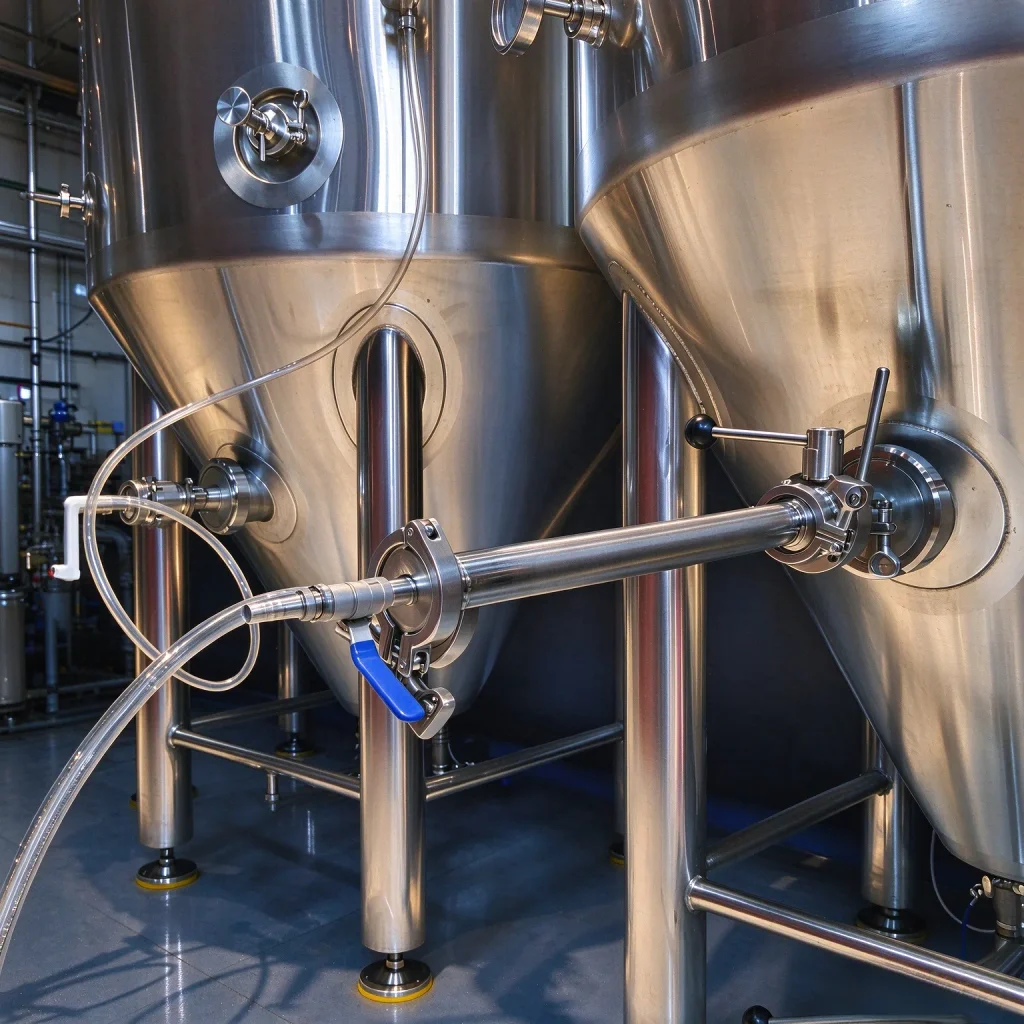
3. How to Clean a Carbonation Stone Properly
Cleaning a carbonation stone with alkaline cleaner alone is not enough. Alkaline washing (such as 1-3% NaOH) removes organic fouling — yeast, proteins, and hop resins. But brewing also produces mineral deposits and beer stone, mainly calcium oxalate and calcium carbonate. These inorganic deposits cannot be removed by alkaline washing and require acid washing.
The correct cleaning process:
- Rinse with clean water to remove surface residue.
- Soak in 1-3% NaOH solution for 30-60 minutes to remove organic fouling.
- Rinse with clean water until pH is neutral.
- Soak in a nitric acid or phosphoric acid-based cleaner for 20-30 minutes to remove mineral deposits and beer stone.
- Rinse thoroughly with clean water until pH is neutral.
- Clean every 2-3 batches, or immediately if carbonation efficiency drops.
Cleaners to avoid:
- Hydrochloric acid (HCl) — corrodes stainless steel; never use it.
- Chlorine-based cleaners — cause pitting corrosion and damage the stone's micropores; never use them.
- Acid washing alone — acid removes inorganic deposits, alkaline removes organic fouling; neither replaces the other.
4. Summary
| Tank Type | Carbonation Stone Needed? |
|---|---|
| Primary fermentation tank | No |
| Unitank (fermentation + maturation + carbonation) | Yes |
| Bright beer tank | Usually yes |
A carbonation stone is not necessary for every fermentation tank. It is necessary when the tank also handles carbonation. If you install one, clean it with both alkaline and acid washing — alkaline washing alone will clog the pores over time, reduce carbonation efficiency, and eventually ruin the stone.
If you have any questions for discussion,please feel free to discuss together.