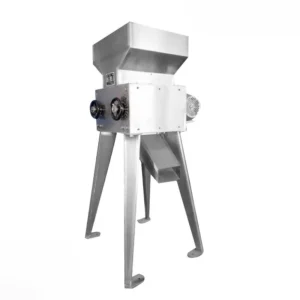
After mashing ends, brewers must separate the mash into solid and liquid as quickly as possible. Otherwise, the quality of the semi-finished wort suffers. Spent grain contains polyphenols, and long soaking gives wort a bitter, astringent taste and a husky flavor while also deepening its color. Therefore, wort filtration should achieve three goals: separate solids from the mash quickly to obtain clear wort, protect wort quality and raw material utilization, and shorten filtration time per batch to raise daily mashing capacity. Filtration takes the longest time in the entire wort preparation process, so it is a key operation affecting wort output and quality.
Main Wort Filtration Methods
Brewers mainly use two wort filtration methods: the lauter tun method and the filter press method.
The lauter tun method is the traditional wort filtration method. It is easy to operate and makes wort quality easy to control. Most domestic breweries currently use this method.
The filter press method features a larger filtration pressure difference and faster filtration speed. It is less sensitive to changes in malt and adjunct milling degree. However, it has disadvantages such as poorer wort clarity and higher operating costs.
In recent years, modern lauter tuns developed from traditional designs have made major improvements in equipment level and process operation. As a result, they can well meet the needs of modern beer production.
Key Factors Affecting Wort Filtration
During filtration, brewers should consider how various factors affect wort filtration and minimize or eliminate negative effects, so as to separate wort from spent grain as quickly as possible. The main influencing factors are as follows.
Raw material quality. Wort made from well-modified malt with suitable milling degree filters faster; otherwise, it filters more slowly.
Mash concentration. Higher mash concentration raises viscosity, reduces wort flowability, and slows filtration. Therefore, brewers should control the appropriate grist-to-water ratio so that first wort gravity stays at 16–18°P and does not exceed 20°P.
Filtration temperature. Higher temperatures lower wort viscosity and loosen the spent grain bed, speeding up filtration. Therefore, brewers generally control filtration temperature at 76–78°C and maintain heat during filtration.
Spent grain bed thickness. After the mash settles, the grain bed should be 30–40 cm thick and should not exceed 45 cm. A bed that is too thick reduces filtration speed, while a bed that is too thin makes it hard to ensure clear wort.
Mash pH. Hydrogen ion concentration affects mash viscosity and the dehydration and swelling of colloidal substances in spent grain. The most favorable pH for filtration is 5.5–5.8, and filtration speed decreases as pH rises.
Filtration operation. Operator practice also strongly affects wort filtration speed. Brewers should therefore follow standardized operating habits, including reasonable control of wort outflow rate, appropriate recirculation time, top-to-bottom raking, timely sparging to loosen the grain bed, and a reasonable sparging process.
Why Fast Separation Matters
Fast wort separation matters because filtration is the slowest step in wort preparation. In short, every minute saved per batch directly increases daily mashing capacity. Moreover, quick separation limits prolonged contact between wort and spent grain, which protects wort color and flavor. Therefore, filtration is not just a separation step; it is a quality and efficiency control point in the brewhouse.
To separate wort from spent grain quickly after mashing, brewers should choose the right filtration method and control raw material quality, mash concentration, filtration temperature, grain bed thickness, mash pH, and operating practice. When these factors work together, filtration becomes faster, wort stays clear, and brewhouse output improves.