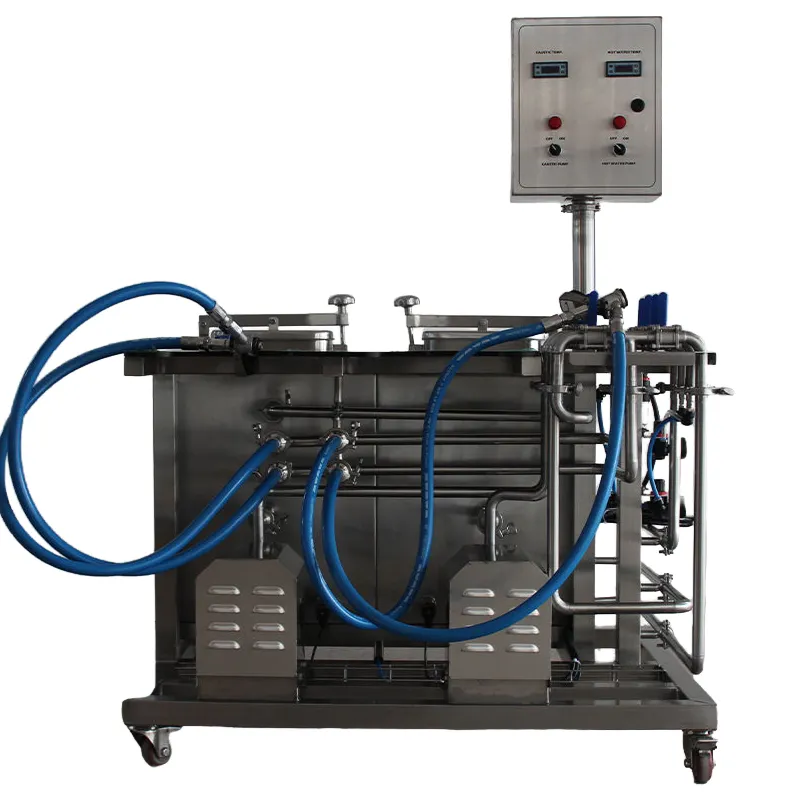
A lot of customers open the conversation with "I need a 10-barrel beer system," then immediately ask how big the lauter tun should be. But barrel count only tells you the output. Whether the lauter tun diameter is right depends on how much malt you're actually putting into it each batch.
There's a set of commonly circulated numbers out there: 1060mm for 5 barrels, 1210mm for 7 barrel beer brewing euipment, 1460mm for 10 barrels. Some people call this the "standard," but it's not an enforced industry standard. More accurately, it's a set of empirical reference values that some brewhouse equipment manufacturers have carried forward over time. Actual differences between manufacturers are significant — for the same 10-barrel system, some suppliers build lauter tuns with a 1524mm diameter, others go with 1460mm. For 7 barrels, some manufacturers offer an internal diameter of 1372mm. So these numbers are a reasonable starting point, but not something you should copy without question.
Why You Can't Just Pick a Lauter Tun Diameter Arbitrarily
After mashing, the malt husks settle at the bottom of the lauter tun and form a filter bed. Wort passes through this bed, which traps solid particles and lets clear wort through.
The thickness of this bed matters a great deal:
- Too thin: Wort finds "shortcuts" through the bed and flows out before it's properly filtered. The result is cloudy wort that's harder to handle in the boil.
- Too thick: Resistance increases, lautering takes longer, and the wort is exposed to air for an extended period. Oxidation risk goes up, and both color and flavor suffer.
The range most widely accepted in the industry is 30 to 40 centimeters, with around 35cm being the balance point in most cases. But this isn't an iron rule — different milling methods call for different thicknesses.
Working Through an Example With a 10-Barrel System
Let's assume you're using only barley malt, no wheat malt or corn flakes — because only barley husks really contribute to forming the filter bed.
For a 10-barrel brewhouse, our standard external diameter is 1460mm. With 80mm of insulation on each side, the internal diameter comes out to 1300mm.
At a water-to-grain ratio of 1:4, a 10-barrel batch needs roughly 240kg of barley malt. Using the rule of thumb that 1000kg of malt occupies about 2 cubic meters, 240kg comes to roughly 0.48 cubic meters.
If you want to keep the filter bed at the ideal 0.35-meter thickness:
0.48 = πr² × 0.35
The resulting diameter works out to exactly 1300mm — which is precisely our internal diameter.
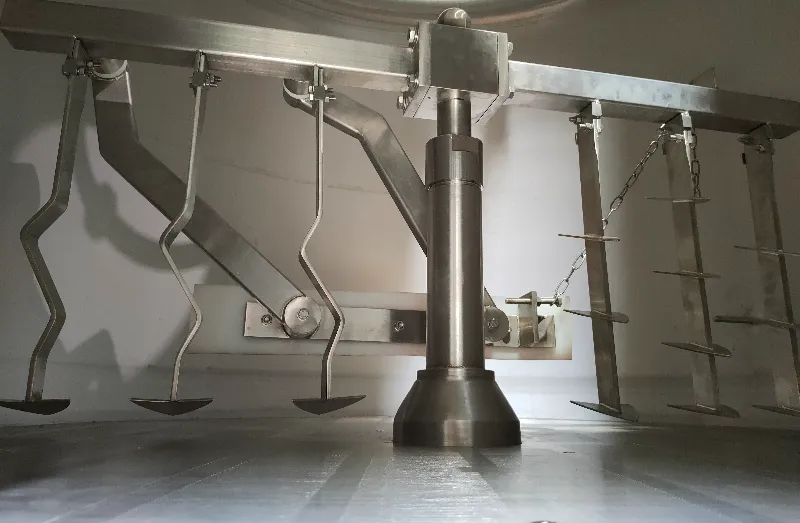
But There's One Variable You Need to Tell Us Upfront
The calculation above assumes you're brewing the same gravity every batch. In reality, many breweries run a 12°P regular beer one day and an 18°P high-gravity beer the next — and the malt bill can differ dramatically.
If you size the diameter around your regular batches, the grain bed will be noticeably too thick when you brew high-gravity beers, leading to slow lautering and higher risk. Conversely, if you size it around your high-gravity batches, the bed will be too thin for regular beers, and wort clarity will suffer.
So before settling on a diameter, you need to clarify two things:
- What gravity range do you brew most often?
- What's the maximum malt bill for your high-gravity batches?
Give us those two numbers, and we can calculate a diameter that serves your day-to-day production without choking on high-gravity batches.
Milling Method Matters influence Lauter Tun Diameter Too
Dry milling and wet milling produce different volumes and different degrees of husk integrity from the same weight of malt. Wet milling preserves the husks better, resulting in a looser filter bed that can be run a bit thicker. Dry milling fractures more husks, so the bed compacts more easily and the thickness needs to be kept on the conservative side.
If you haven't settled on a milling solution yet, we can look at that together and make sure your malt mill and lauter tun are matched properly.