In a brewhouse, cleaning is never a "chore." It is a core process that determines both beer flavor and equipment lifespan. Many brewers spend half their working time on cleaning. That is not waste. It is the precondition for consistent flavor batch after batch.
The heat exchanger sits between the kettle and the fermenter. It flash-cools wort on its way to fermentation. The problem: once wort drops in temperature, it enters the highest-risk window for infection. Inside the heat exchanger, plate gaps are narrow and flow channels are complex. Any residue can become a breeding ground for wild yeast and bacteria. So the cleaning quality of the heat exchanger directly decides whether this batch gets infected or develops off-flavors.
But what counts as cleaning a brewery heat exchanger properly?
Start with the most basic principle: clean immediately after use. Wort is highly viscous and rich in sugar and protein. Once it dries and adheres, cleaning difficulty multiplies. That is why, in equipment design, the heat exchanger should have a tri-clamp port. This port connects directly to the hot water pump outlet for CIP circulation cleaning.
At the same time, protect the heat exchanger and keep large particles out of the plate channels. Install a pipeline filter upstream to intercept debris. Where the process requires it, you can also specify a 20L, 30L, or 50L hop back.
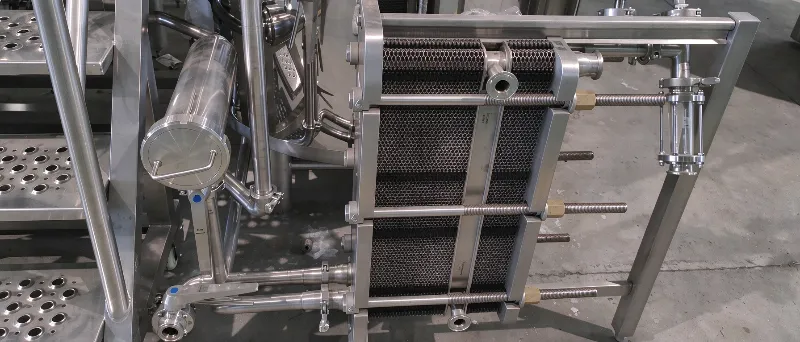
However, connecting hot water and rinsing is far from enough. As a brewer you must understand: hot water is only a pre-rinse. Real cleaning requires a complete CIP procedure.
Alkaline wash for protein removal. Use an alkaline cleaner such as caustic soda or a dedicated alkaline detergent. Circulate it at 50–60°C or above to break down sugar and protein residue.
Acid wash for beer stone removal. Brewing forms a calcium oxalate "beer stone" that is insoluble in water and alkali. Dissolve it by circulating a dilute acid solution of 1–2% phosphoric or nitric acid.
Mind the flow direction. Circulate the cleaning solution from bottom to top to help expel air. Periodically reverse the flow direction to strike dead spots and blocked channels.
Periodic inspection. Open gasketed heat exchangers periodically according to water quality and usage. Check for fouling and gasket condition.
Clean it properly, and the heat exchanger works reliably. Clean it poorly, and no recipe can save the beer.
If you are selecting equipment or planning a cleaning procedure, feel free to contact us. Tell us your process requirements, and we will help you configure both the equipment and the CIP plan.