Hard seltzer is carbonated water plus alcohol. That is the whole formula. The alcohol is ethanol made by fermentation, and the ABV usually lands around 5%. In its purest form, seltzer has no sugar, no color, and no flavor. Most commercial versions do add fruit flavoring, though.
A Quick History
The word "seltzer" stayed off most radars until the late 2010s. Commonwealth countries had alcopops before that—sweet, pre-mixed drinks that were often blended rather than brewed. Hard seltzer kept the light, refreshing premise. It leaned on fermentation and filtration instead, which gave it a cleaner base.
Nick Shields began brewing early batches of SpikedSeltzer in Connecticut in 2013. The category gained real momentum around 2018–2019. Then came the viral moment. In June 2019, YouTuber Trevor Wallace posted a parody video. The line "Ain't no laws when you're drinking Claws" became a meme. White Claw sales jumped nearly fourfold by July, and the brand declared a nationwide shortage within weeks. The video did not invent the trend. It poured gasoline on it.
The "Healthy" Image
Marketers pitch hard seltzer as a lighter alternative to beer and cocktails. "Low calorie" and "gluten free" are the headline claims. A 12-ounce can typically runs around 100 calories. That is lower than most beers and a standard glass of wine. Health professionals still push back. Alcohol is still alcohol. Low calories do not make it a health drink, and several cans quietly stack up the intake. The marketing is clever. The nutrition label tells a more modest story.
How It's Made at Commercial Scale
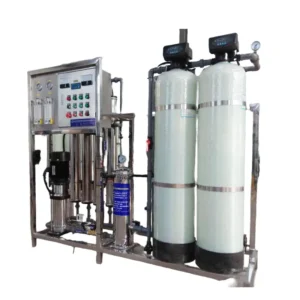
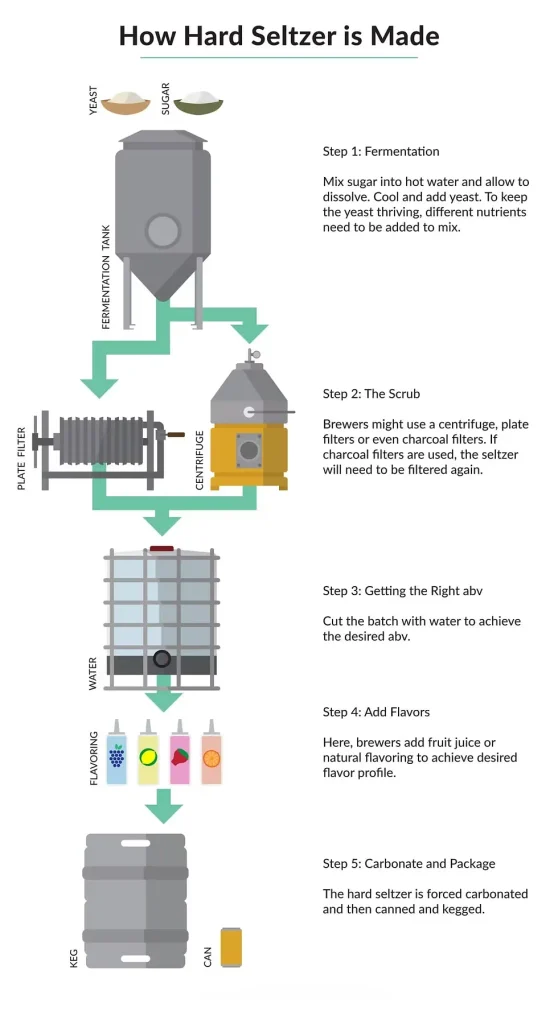
Industrial production is simple in concept. Producers ferment a sugar wash, or a malt/rice wort, with added nutrients. They then filter it through activated carbon, DE, or membrane filters to strip out color and flavor. The clear base is diluted to the target ABV, force-carbonated, and canned. The final product is essentially water and ethanol with almost nothing else. That gives it a remarkably long shelf life. When producers use flavors, they add them back after the stripping process.
The Homebrew Angle
Any homebrewer knows the pain. Ferment plain sugar and water with yeast, and you usually get something closer to rocket fuel than sparkling water. Yeast needs more than sucrose to behave. It needs nitrogen, micronutrients, and a stable environment. A clean seltzer fermentation also demands a highly neutral, flocculent yeast strain. Something in the Kölsch or California Common family works well. Careful nutrient supplementation keeps sulfur off-flavors away.
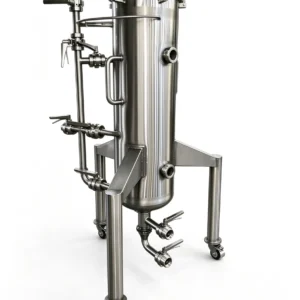
One detail often gets overlooked. Pure sugar washes have almost zero buffering capacity. As fermentation produces CO₂ and carbonic acid forms, the pH can crash fast. A small amount of potassium bicarbonate as a buffer keeps the yeast healthy and the fermentation clean. After fermentation, cold-crashing and kegging for a few days at serving temperature yields something that tastes, genuinely, like soda water—and the right hard seltzer equipment makes that cold-side step much easier to control.
The Takeaway
Hard seltzer is not complicated. That is precisely the point. It is a blank canvas: water, alcohol, bubbles, and optionally a hint of fruit. Whether that simplicity reads as "refreshing" or "boring" depends on your palate. Either way, it has reshaped the drinking landscape in a remarkably short time.